How Data Flows on CFG?
How application-specific Data Flows through Nodes (BBs/stmts) and Edges(control flows) of CFG (a program) ?
may analysis:
outputs information that may be true (over-approximation)
must analysis:
outputs information that must be true (under-approximation)
Over- nad under-approximations are both for safety of analysis
Input and Output States
- each execution of an IR statement transforms an input state to a new output state
- the input (output) state is associated with the program point before(after) the statement
In each data-flow analysis application, we associate with every program point a data-flow value that represents an abstraction of the set of all possible program states that can be observed for that point.
Another view: Data-flow analysis is to find a solution to a set of safe-approximation-directed constraints on the IN[s]‘s and OUT[s]‘s, for all stmts
- constraints based on semantics of stmts (transfer functions)
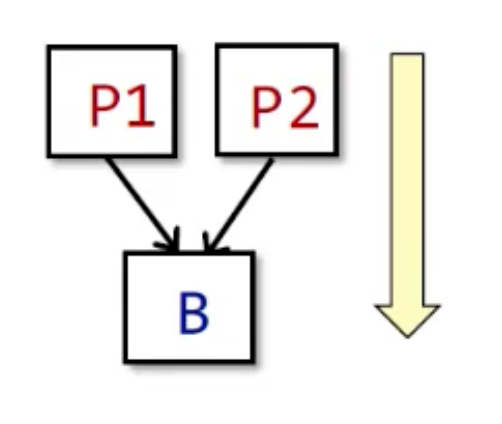
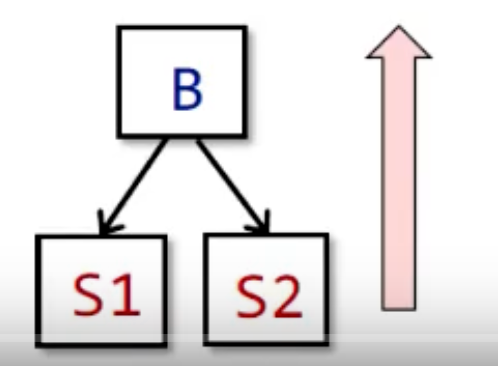
- constraints based on the flows of control
Notations for transfer functions
Forward Analysis
Backward Analysis
Notations for Control Flow’s Constraints
Control flow within a BB
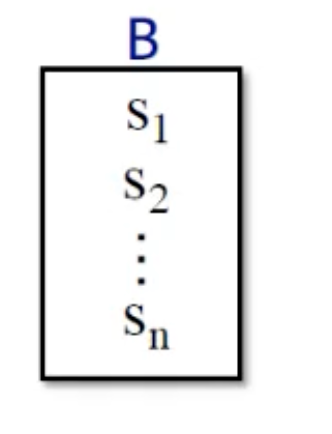
Control flow among BBs
Application
Reaching Definitions Analysis
A definition d at program point p reaches a point q if there is a path from p to q such that d is not “killed” along that path.
For example: lint variable undefined error